


Types of leather for bags: the complete Labienhecha guide
I'll confess: at Labienhecha we ended up with such a mess of leathers, finishes and care routines that even I got confused. And if it happened to me, choosing them one by one, how could it not happen to you?
So it was clear we needed to do this...
(for your sanity and for ours, haha)
This is the complete guide to the leathers we use to make our bags, by hand, in Málaga.
What they are, how they differ and, above all, how to choose yours. Because we don't make perfect things, we only make well-made things, and that starts with you understanding what you're holding in your hands.
LET'S TALK ABOUT 4 FAMILIES:
-
SOFT, 100% NATURAL LEATHER
-
SOFT, 100% NATURAL LEATHER, BUT FINISHED
-
SOFT WATER-REPELLENT LEATHER
-
RIGID WATER-REPELLENT LEATHER
Before you choose, understand your leather in 3 questions
You don't need to be an expert. Just answering these tells you almost everything:
- Does it change over time or stay the same? Almost all our leathers are alive, but some change a lot, others barely, and others not at all.
- Does it repel water or absorb it? This is where the finished ones and the water-repellent ones stand apart from the rest.
- Do you want it soft or with body? This decides the shape —and the drape— of your bag. A soft bag's leather isn't the same as a structured bag's.
1. The soft, natural one: the one I say has life.
Almost all our leathers are genuine vegetable-tanned cowhide leather: real leather, tanned with natural tannins, free of toxics.
One important note, because it causes confusion: "vegetable-tanned" does not mean vegan leather. It's animal leather, tanned in a completely natural way, with flowers and plant tannins, with a wonderful feel and smell and a less aggressive process.
And what does that mean for you?
That these are leathers with life: they develop patina, they can go a little tanned, they mature with use and they tell your story. It's not that they get ugly with time, they simply become yours, they build their own story...
Which colors are these?
The most natural ones are the unfinished ones: natural, baby blue, wine and terracotta. Also the ones from La Inesperada in brown, dark green and lavender grey and our classic black (although black doesn't change or suffer at all, it can lose a little color if it reacts to someone's sweat or chemicals, like perfume or deodorant -heads up, my black Irene backpack is this leather and it's never lost color on me, but being natural and depending on which products you use, it could happen)
Super soft, gorgeous, and the ones that change the most —with use they gain body, go more tanned and keep every mark—. They'll have memory. They'll have history. They're also the most delicate with water and stains, so they ask for a bit more care (we tell you how further down).
Who's it for? For whoever wants a leather with character, that ages by their side.
What do our customers say? What they love most (them and us) is the softness, the delicacy, the smell and the drape.
Do they accept wax and conditioning?: yes, but you should keep in mind a few nuances we tell you about here
2. The soft, natural but finished one: more protected
It's the same vegetable-tanned cowhide leather, but with a finish that protects it and makes its color barely change. They're not water-repellent as such, but they're very forgiving if they get stained or water lands on them. No drama.
There are two finishes:
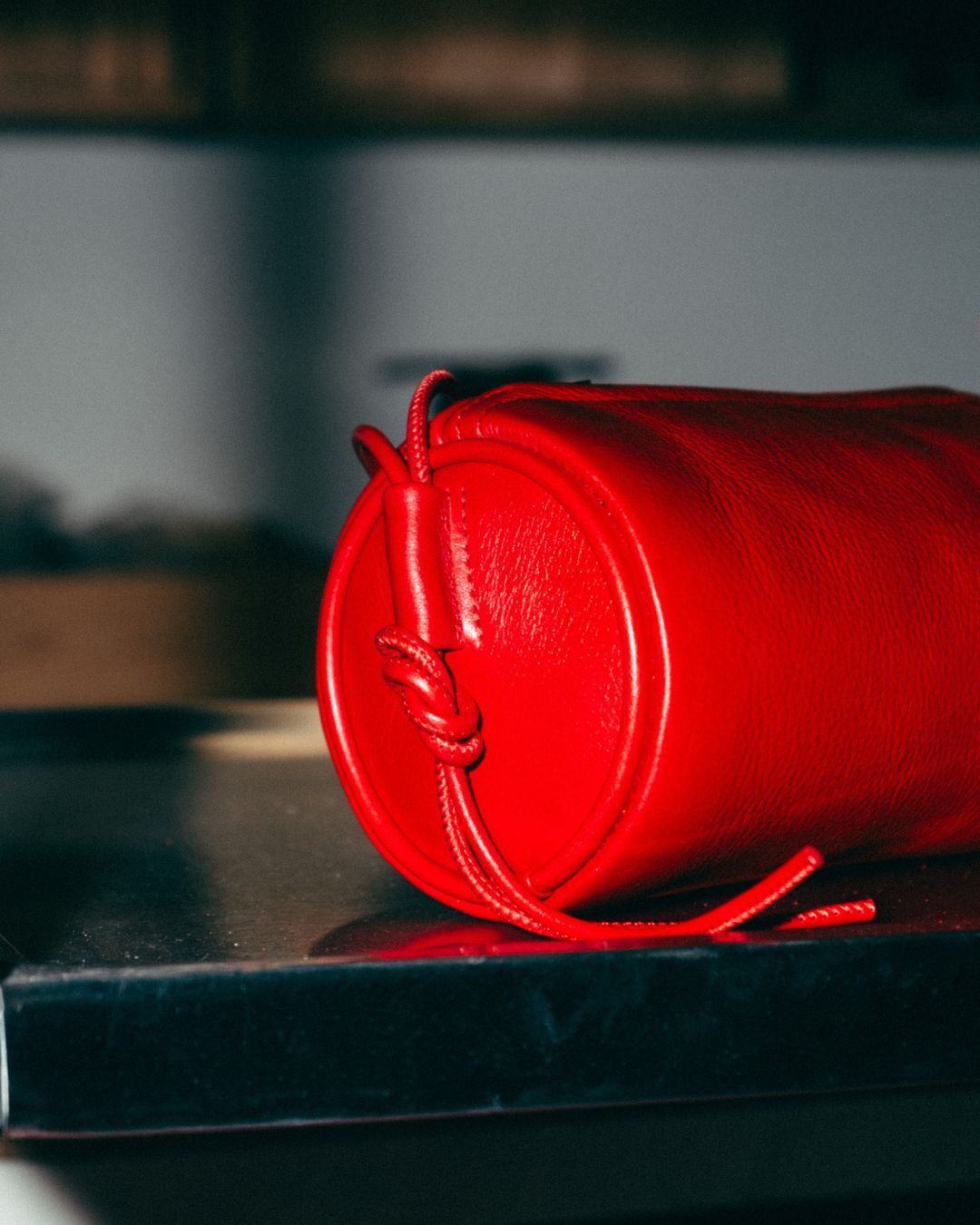
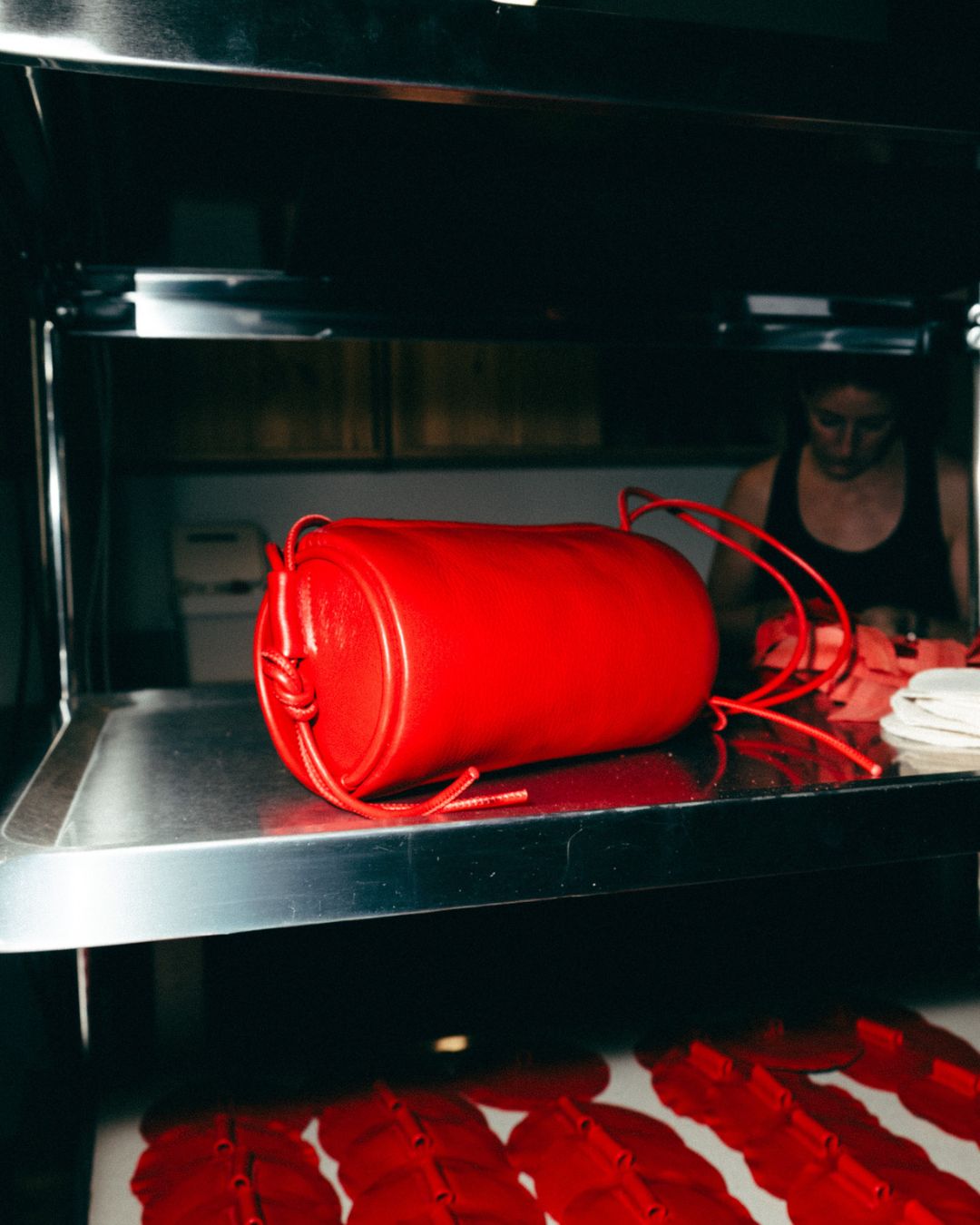
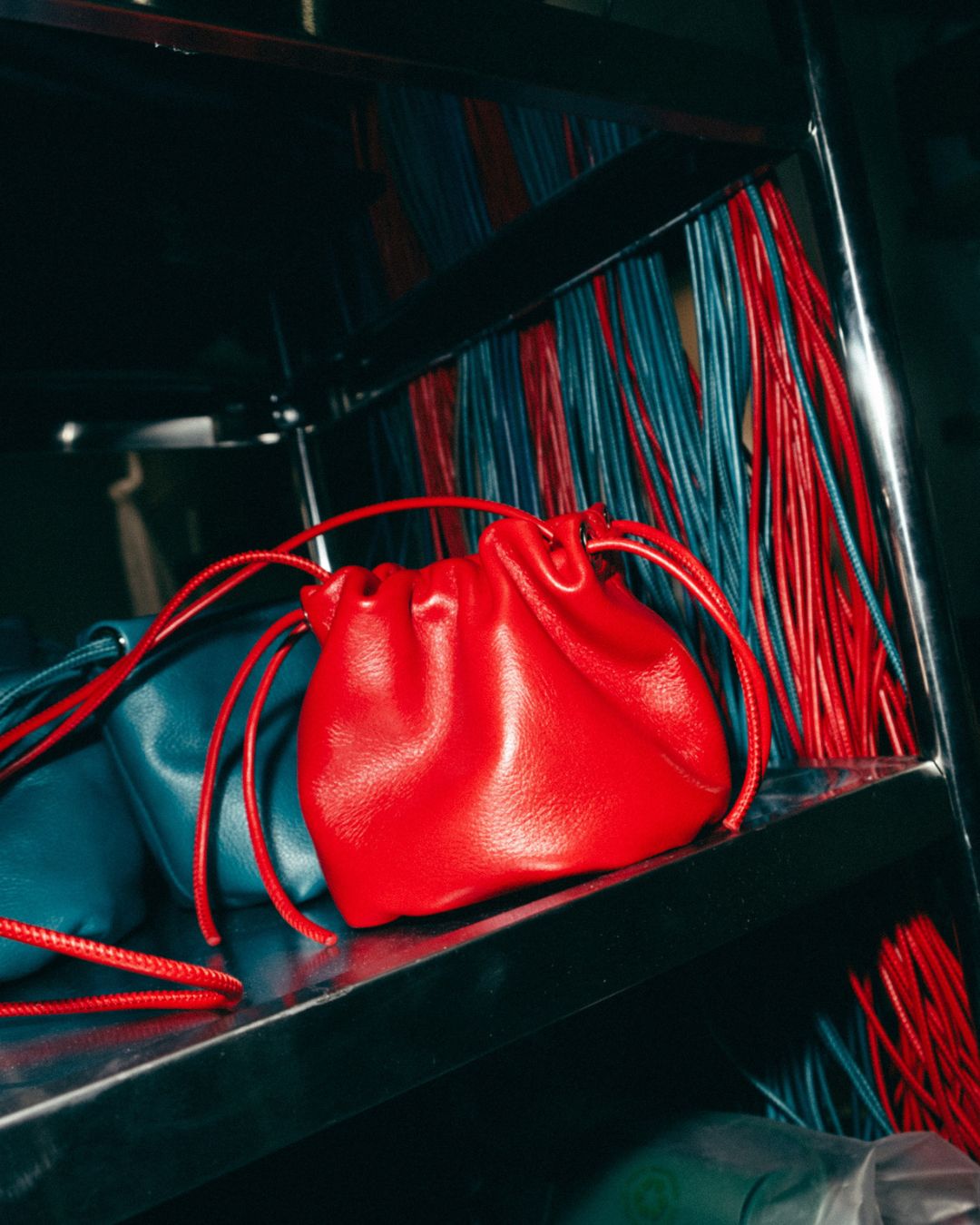
With a slight shine, somewhat satin: night blue, turquoise, red
Night blue, turquoise and gloss red get that satin shine naturally, letting the leather's own oils work in the barrel-waxing; a shine you can't even feel to the touch (heads up, it's nowhere near patent leather... it's just that they're not matte and have that satin look)
Matte: taupe brown and black.
The taupe one is the one everyone ends up touching: more matte, with very stable color. And we gave black that same finish, because you asked us to: it ends up much more protected.
Who's it for? For whoever wants a leather with soul, but that stays practically the same over time.
What do our customers say? What they love most is the feel of the leather and how tough it is. Some have even confessed it survived cat scratches...
Do they accept wax and conditioning?: yes, no problem at all. All the details here
3. The soft water-repellent one: bombproof
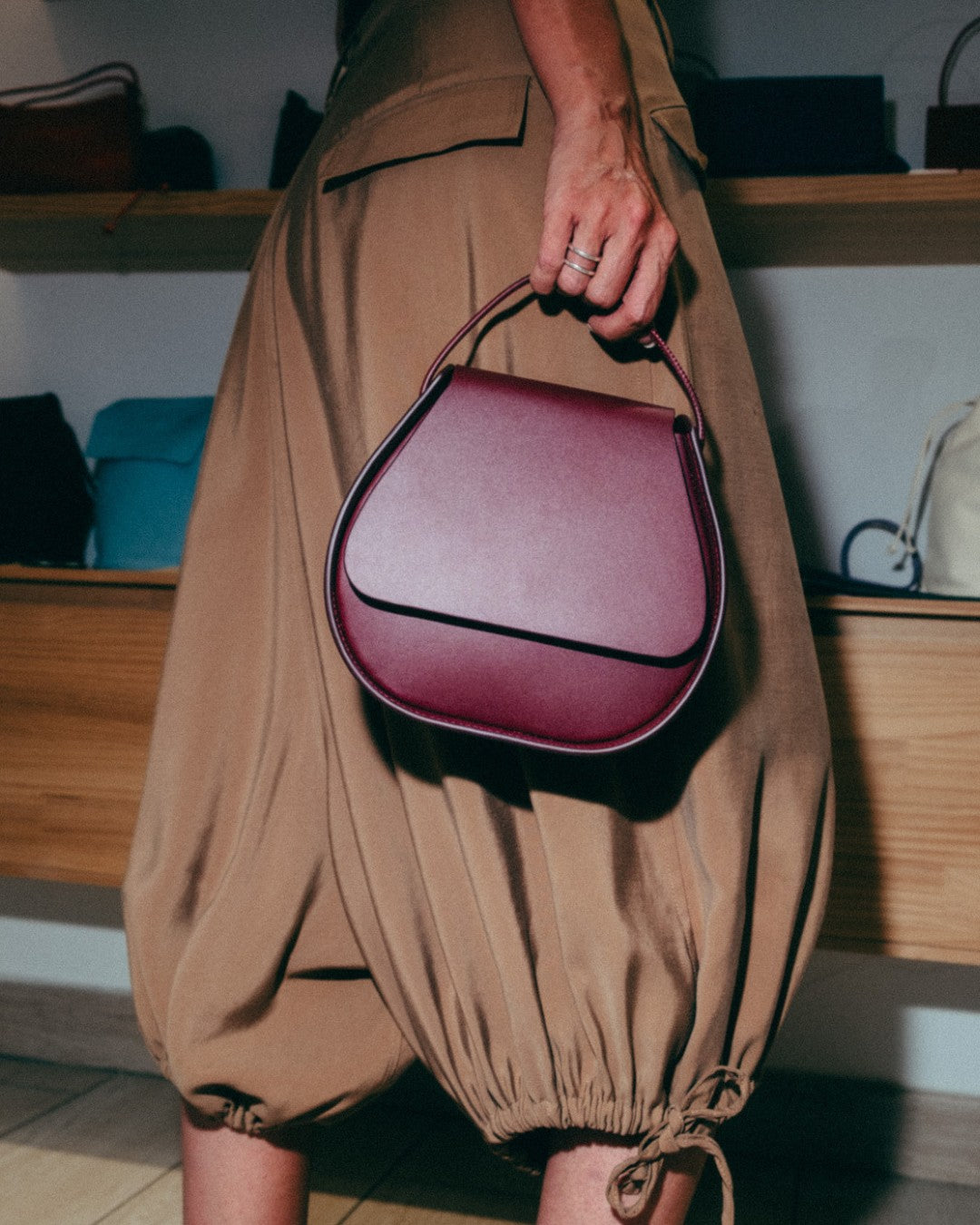
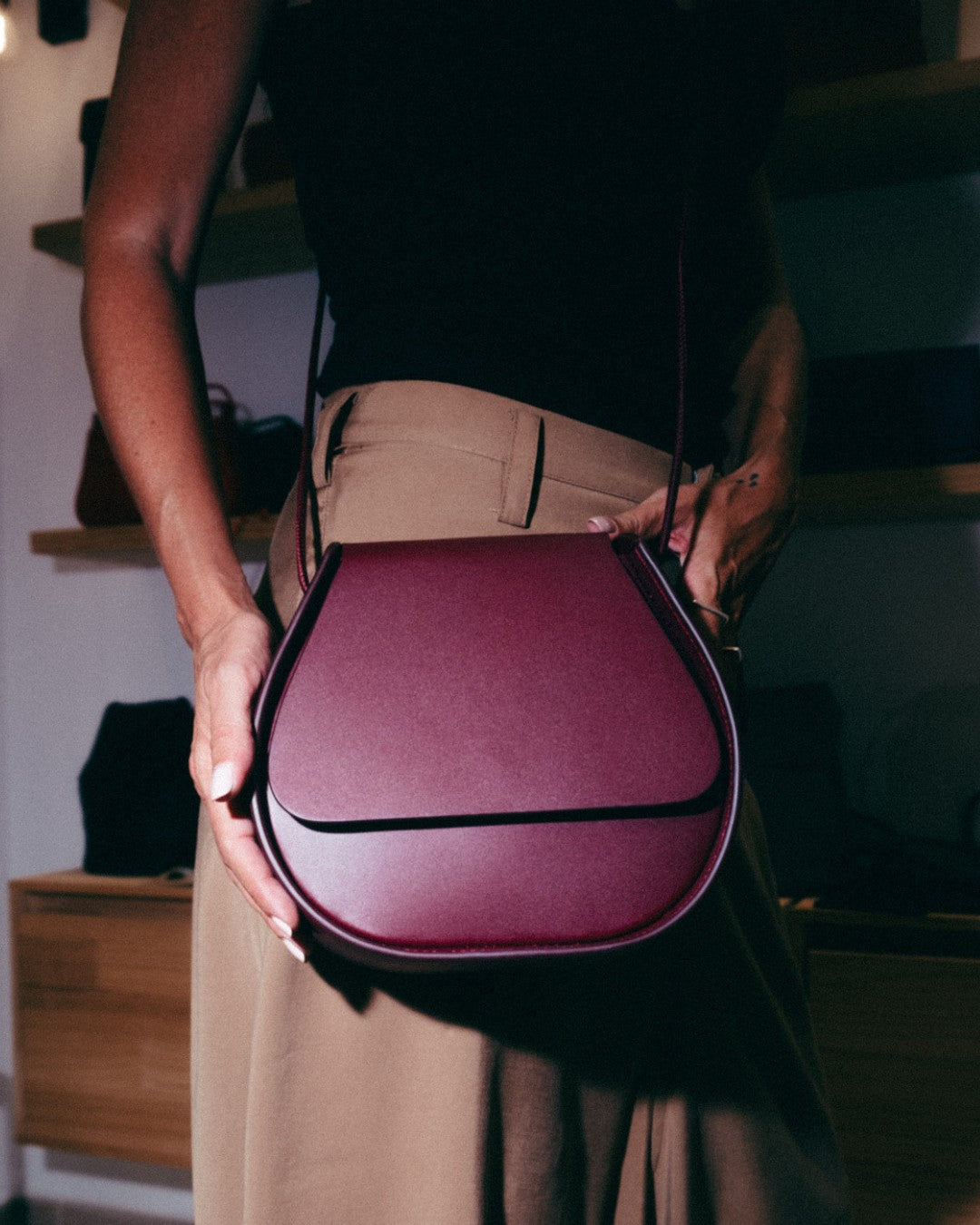
The same soft leather, with a water-repellent treatment that repels water and stains: you can spill anything on it —pen, wine, coffee— and it cleans super easily, outside and inside. It's the one from drops like La Ventana, which flew off the shelves: lemon yellow, jade, dusty mauve, blush and the two eggplants that have stayed in the collection.
Who's it for? For whoever uses the bag daily, doesn't want to be fussing over it and wants absolute peace of mind (yes, even with rain, small kids and assorted dramas). This leather takes everything.
What do our customers say? the ones with this leather are super happy and notice it's a different finish but it fits perfectly. That said, if you're one of those who loves our natural or natural-finished leather, you'll notice a change, and here we can only tell you it's a very personal thing.
Do they accept wax and conditioning?: yes, no problem at all. They're also the most forgiving to clean. All the details here
🎥 There's a video where I pour wine, ketchup, soy sauce, draw on it with pen... and put this leather through a thousand tortures. You can watch it here
🎥 And in this one I pour water on an eggplant bag. You can watch it here
4. The rigid leather for structured bags: also water-repellent
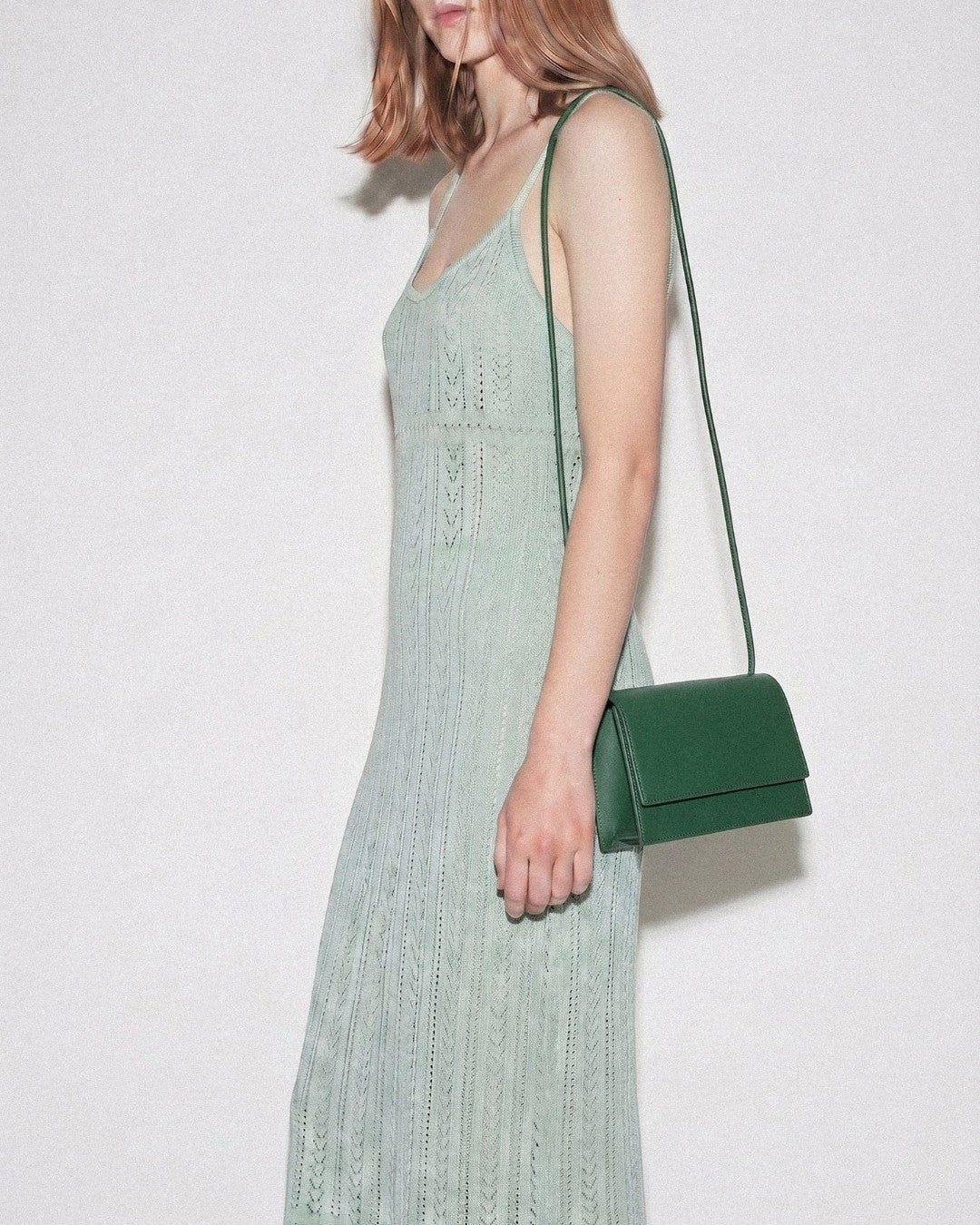
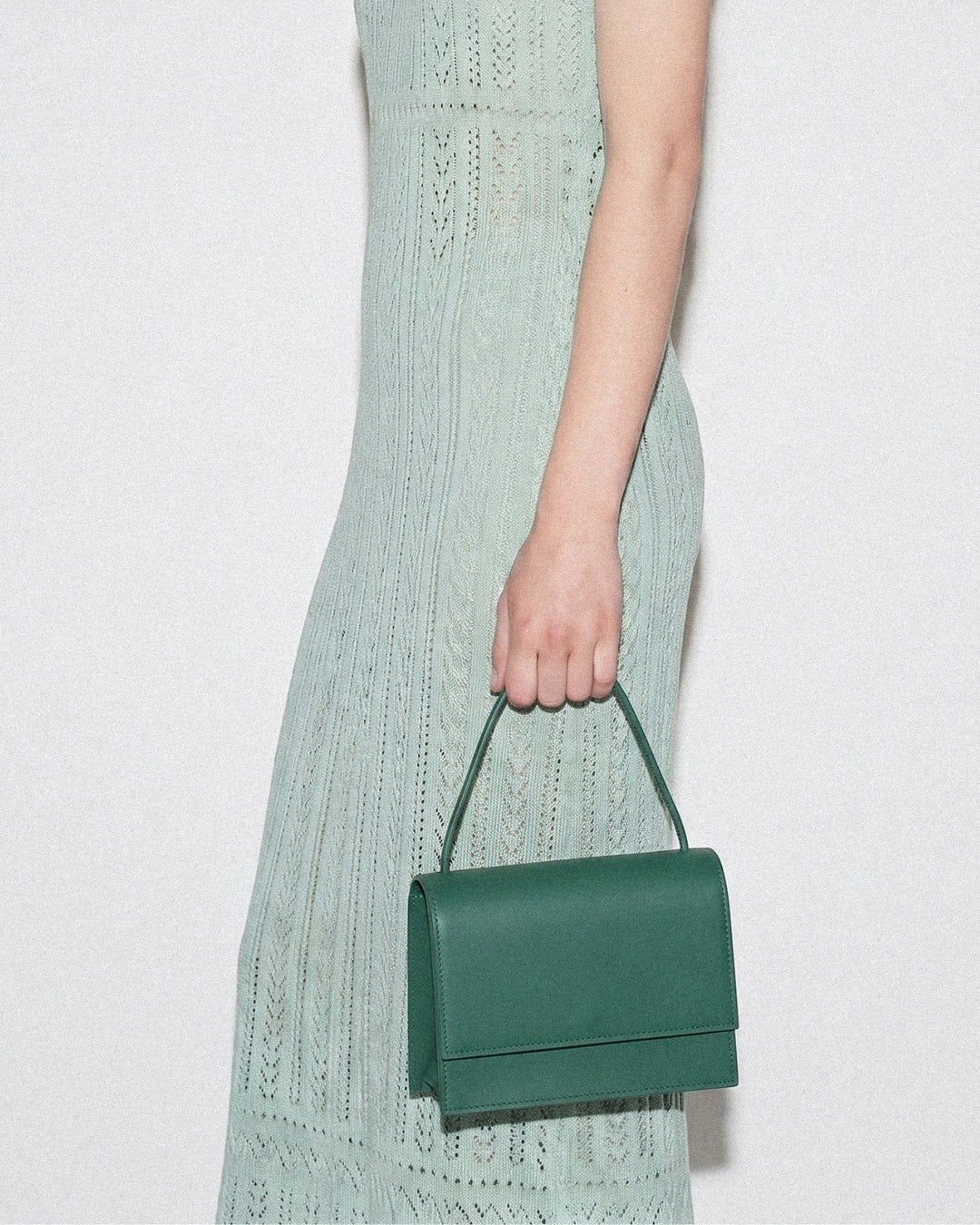
The rigid or structured leather gives body and shape: it's the one used for Rafaelas, Paquita, Pepa, Bernardita, Ninas, Origamis, Ramonas... Bags that don't squash or crumple, that are "firm".
This leather is brutal: they're also water-repellent and easy to clean.
But you should know that a structured bag is always trickier with scratches, corners, etc. There are many ways to repair it... I always give the example of a solid wood piece of furniture: if it gets scratched, there are always ways to polish, even out, dye, fill and leave it beautiful, but the mark and its own story will be there.
🎥 You can see me pour water on a Rafaela bag in this leather, here (look at the jade color variant)
Soft or rigid?: the shape of your bag
Here we're not talking about color or finish, but body. Soft leather is flexible and can be scrunched: it allows designs with drape or folds, like our Angelitas, Juanas, Lolas, Dolorosa or the backpacks.
Soft ones are always more flexible bags than structured ones, even less vulnerable to dramas - that has to be said - especially when it comes to scratches, since being rigid, it could happen that you brush hard against a wall or your cat has a feast sharpening its claws on it (by the way, don't ask us why, but cats love doing this on wood and... on leather bags too! They love it! so never leave it near them.
These are very different designs and it comes down to personal taste and needs. If you think about it, this leather works like leather boots, a leather blucher or loafer that's rigid, etc. It's the same thing... but with the right products, we can always keep them beautiful.
Which is your leather?
- I want a leather that changes and tells stories → natural unfinished vegetable-tanned (natural, wine, terracotta, classic black, etc).
- I want soul and something that feels special and natural but with stable color that doesn't shift → natural finished vegetable-tanned (night blue, turquoise, red, taupe, black).
- Daily use, rain, zero worries → soft water-repellent
- A bag with structure → rigid
- A bag with drape → soft.
Choosing well is only half of it: care for it
A well-made leather is meant to last for years. But it truly lasts if you care for it. We tell you everything here:
- How to care for a leather bag with beeswax
- Does leather get ruined by water? The test (and what to do)
Frequently asked questions
What is vegetable tanning? Is it vegan leather?
No, it's not vegan: it's genuine cowhide leather, tanned with natural tannins instead of chrome. It's a more natural tanning that gives living leathers: they mature, build patina and tell your story.
Which type of leather is most durable for a bag?
The water-repellent ones: they repel water and stains and clean without fear. Finished vegetable-tanned leathers also hold up very well; the natural (unfinished) ones are the most delicate, but also the ones that gain the most character.
Does leather get ruined if it gets wet?
It doesn't get ruined: it may absorb a little, but if you look after it, it recovers. We show you, soaking it for real, in this test.
Because in the end, whichever leather you choose, the idea is the same: less, but better. Pieces meant to go through life with you. Well-made things.


COMMENT WHATEVER YOU LIKE!